
You brush the walls, vacuum the floor, and the pool still does not look as clean as expected. The problem may not be how often you clean, but whether you are using the right cleaning step for what is actually happening in the pool.
Brushing tackles algae and buildup clinging to walls, steps, and hard-to-reach surfaces. Vacuuming handles the dirt, sand, and debris that settle on the pool floor. Arizona heat, dust, and monsoon debris make both important, but each solves a different part of the problem.
Knowing when to brush, when to vacuum, and when your pool needs more than routine cleaning can save you from repeating work that is not fixing the cause.
What does Brushing a Pool do?
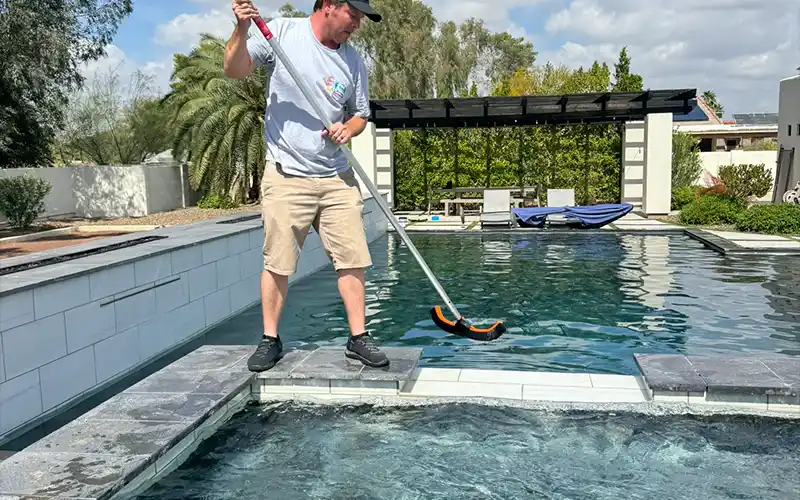
Brushing is the process of scrubbing pool walls, steps, corners, and other surfaces to loosen buildup before it becomes harder to remove.
Many pool owners focus on keeping the water clear but overlook what sticks to the surfaces underneath.
Brushing Helps Remove Algae and Surface Buildup
Algae often begins growing along pool walls, steps, and areas with poor circulation.
Brushing breaks up this buildup and helps move particles into the water so the filtration system can remove them.
Without regular brushing, algae can continue growing even when chemical levels appear normal.
Brushing Reaches Areas Your Pool Equipment Misses
Water circulation does not always reach every part of the pool equally.
Corners, steps, behind ladders, and shaded areas can collect dirt and organic material over time.
Regular brushing helps prevent these areas from becoming problem spots.
Brushing Supports Better Chemical Performance
When debris and algae attach to pool surfaces, chemicals may not work as effectively.
Removing buildup allows sanitizers to reach more areas of the pool, helping maintain better water quality.
What does Vacuuming a Pool do?
Vacuuming removes dirt, debris, and particles that settle on the bottom of the pool.
While brushing loosens buildup, vacuuming removes what has already been collected.
Vacuuming Removes Settled Debris
Dust, sand, leaves, and other particles often sink to the pool floor.
This is especially common in Arizona, where wind and dry conditions can introduce large amounts of outdoor debris into pools.
Vacuuming helps remove these materials before they affect water clarity or contribute to algae growth.
Vacuuming Helps Clear Cloudy Water
Cloudy water can sometimes result from fine particles circulating through the pool.
A thorough vacuuming session helps remove debris that filters may struggle to capture quickly.
For pools experiencing larger issues, professional green pool cleaning can help restore water quality when regular cleaning methods are not enough.
Brushing vs Vacuuming: Which One does Your Pool Need?
The answer depends on the problem you are trying to solve.
Brushing and vacuuming work together, but they target different areas of pool care.
Choose Brushing When You Notice:
- Green or slippery areas on pool walls
- Algae spots near steps or corners
- Visible buildup on surfaces
- Areas with poor water circulation
Brushing is a preventative step that helps stop buildup before it spreads.
Choose Vacuuming When You Notice:
- Dirt collecting on the pool floor
- Sand or debris after storms
- Leaves and organic material settling underwater
- Cloudy water caused by suspended particles
Vacuuming focuses on removing material that has already settled.
Why Arizona Pools Need Both Cleaning Steps
Arizona pools deal with conditions that make regular maintenance more important.
High temperatures can speed up algae growth. Dust and debris can enter pools frequently. Monsoon storms can introduce additional contaminants that affect water clarity.
Skipping either brushing or vacuuming can leave part of the problem behind.
A complete Pool Maintenance routine combines surface cleaning, water care, and equipment checks to keep your pool in better condition.
How Often should You Brush and Vacuum Your Pool?
The right schedule depends on pool usage, surrounding environment, and current water condition.
Many pools benefit from regular brushing, especially in areas where algae growth is common. Vacuuming frequency may increase after storms, heavy debris, or periods of high use.
Homeowners who maintain their own pools should watch for changes rather than waiting until problems become obvious.
If your pool requires constant cleaning but still struggles with cloudy water or algae, the issue may involve chemistry, filtration, or circulation.
Common Mistakes Homeowners Make With Pool Cleaning
Even homeowners who regularly clean their pools can miss important steps.
Only Vacuuming and Skipping Brushing
Vacuuming removes debris but does not remove buildup attached to pool surfaces.
Without brushing, algae and dirt can continue collecting in hard-to-reach areas.
Only Brushing and not Removing Debris
Brushing loosens buildup, but those particles still need to be removed.
Without proper filtration or vacuuming, debris may continue circulating through the water.
Waiting Until the Pool Looks Dirty
Many pool problems start before they become visible.
Regular care helps prevent larger issues and reduces the chance of expensive cleanup later.
When Brushing and Vacuuming are not Enough
Routine cleaning works well for normal maintenance, but some pool problems require more attention.
If your pool remains green, cloudy, or difficult to balance after regular brushing and vacuuming, there may be a deeper issue.
Possible causes include:
- Incorrect chemical balance
- Poor filtration
- Circulation problems
- Heavy algae growth
- Equipment issues
In these situations, professional help can identify the cause instead of treating only the symptoms.
Keep Your Pool Cleaner with the Right Approach
Brushing and vacuuming are not competing cleaning methods. They handle different parts of pool care and work best when used together.
Brushing removes buildup from surfaces. Vacuuming removes the debris that collects at the bottom. Combined with proper chemical balance and equipment care, these steps help maintain healthier pool water.
Pool Pilots helps Greater Phoenix homeowners handle pool cleaning challenges caused by Arizona weather, debris, and water conditions.
Request professional green pool cleaning support to restore water quality and identify the cause of ongoing problems.