
A routine visit should cover more than skimming leaves and adding chlorine. A full-service pool company checks the water, surfaces, circulation, accessible equipment, and early warning signs that could affect the pool between visits.
The exact checklist varies by provider and service plan. Some tasks happen weekly, while filter cleaning, detailed diagnostics, and repairs follow a separate schedule. Homeowners should understand both the standard visit and the work that may cost extra.
A Routine Pool Service Checklist
A structured visit usually follows the same basic sequence. This consistency helps the technician notice changes rather than treating each appointment like an isolated cleaning.
| Service Area | Typical Routine Check |
| Property access | Gate, pets, equipment access, and visible safety concerns |
| Pool condition | Water level, clarity, color, debris, algae, and surface condition |
| Physical cleaning | Skimming, brushing, vacuuming as needed, and basket cleaning |
| Water chemistry | Sanitizer, pH, alkalinity, and other scheduled readings |
| Circulation | Pump operation, return flow, suction, and visible air |
| Filtration | Filter pressure and signs of restricted performance |
| Equipment | Leaks, unusual sounds, alerts, and visible wear |
| Service documentation | Tasks completed, chemicals added, and problems observed |
Not every item requires adjustment during every visit. The technician should still observe the pool as a complete system.
The Visit Starts With Access and a Visual Review
Before cleaning begins, the technician should look at the pool’s overall condition. This first check can reveal changes that happened since the previous visit.
The technician may note:
- Whether the gate is secure
- Whether pets are safely inside
- The current water level
- Water clarity and color
- Leaves, insects, dust, or storm debris
- Algae in steps, corners, and shaded areas
- Stains or mineral deposits
- Objects blocking the skimmer
- Water collecting near the equipment
- Damage around the deck or pool edge
A technician’s visual review does not replace a formal safety or code inspection. Local rules can vary, but Maricopa County’s residential pool and barrier guidance provides a useful reference for self-closing and self-latching access gates.
Water level deserves particular attention. A low level may cause the skimmer to pull air, while an unusually high level can reduce effective surface skimming.
A large change may point to evaporation, rainfall, an autofill issue, or a possible leak. One observation may not identify the cause, but the technician should document anything outside the pool’s normal pattern.
Surface Cleaning Removes More Than Visible Debris
Weekly pool cleaning keeps debris from affecting water quality and circulation. It also helps prevent algae from gaining a foothold in areas with less water movement.
A routine cleaning may include:
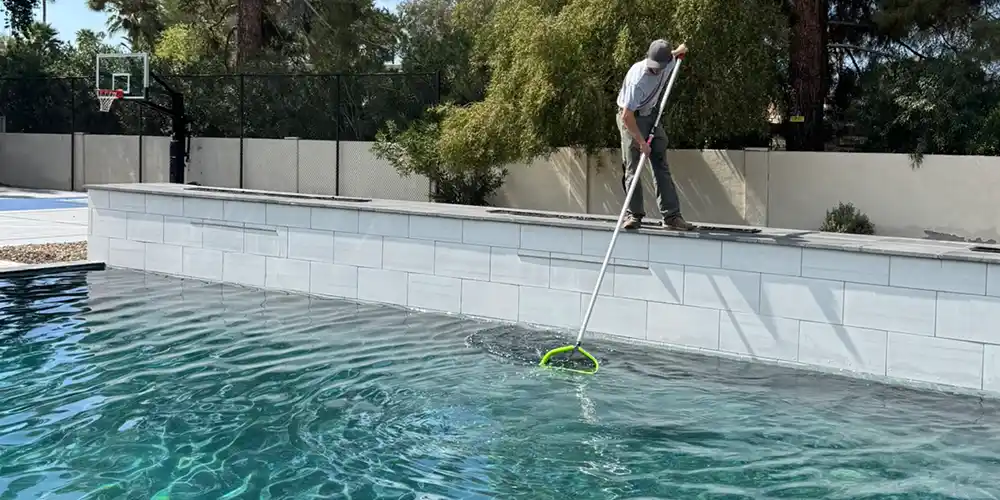
- Skimming floating debris
- Brushing walls, steps, benches, and corners
- Brushing the tile or waterline when needed
- Vacuuming debris from the floor
- Checking the automatic cleaner
- Emptying skimmer baskets
- Emptying the pump basket
- Removing debris near drains or returns
Vacuuming may not be necessary during every visit if the floor is already clean and the automatic cleaner is working properly. Brushing frequency may also depend on the pool surface, season, debris level, and algae risk.
The important point is that cleaning should respond to the pool’s actual condition. A quick skim is not enough when dust has settled on the floor or algae is beginning in low-flow areas.
Water Chemistry Is Tested and Adjusted
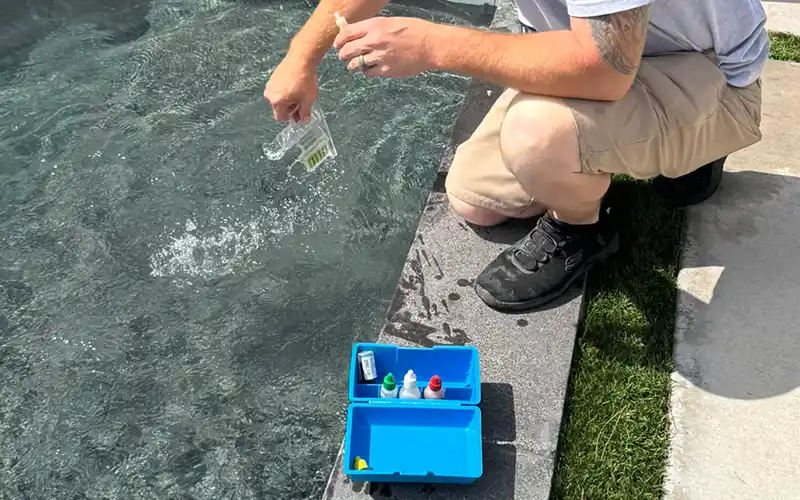
Water can look clear while important chemistry levels are outside the preferred range. Testing gives the technician the information needed to make measured adjustments.
Routine readings may include:
- Free chlorine or another sanitizer
- pH
- Total alkalinity
- Salt level for saltwater pools
- Cyanuric acid or stabilizer
- Calcium hardness
- Other readings relevant to the pool or treatment system
Not every extended chemistry test must happen weekly. Sanitizer and pH usually need frequent attention, while stabilizer, hardness, and salt may follow a different testing schedule.
The CDC recommends routinely testing disinfectant and pH levels. It recommends keeping pool pH between 7.0 and 7.8 because pH affects sanitizer performance, swimmer comfort, and the condition of pool components.
After testing, the technician may add sanitizer, acid, alkalinity increaser, or another product based on the readings. Ask whether routine chemicals are included in your monthly plan and how specialty treatments are billed.
Circulation Is Checked for Changes
Clean water depends on consistent movement. Circulation distributes chemicals, carries debris toward the filter, and reduces stagnant areas where algae can develop.
A basic circulation review may include:
- Confirming that the pump is operating
- Observing flow from the pool returns
- Checking skimmer suction
- Looking for air inside the pump basket
- Watching for a pump that struggles to prime
- Checking whether the automatic cleaner moves correctly
- Listening for unusual pump sounds
- Noting visible bubbles returning to the pool
Weak flow does not automatically mean the pump has failed. Full baskets, a dirty filter, blocked plumbing, incorrect valve positions, low water, or air entering the system can produce similar symptoms.
The technician should report an important change rather than repeatedly treating poor circulation as a chemistry problem.
Filter Pressure and Performance Are Observed
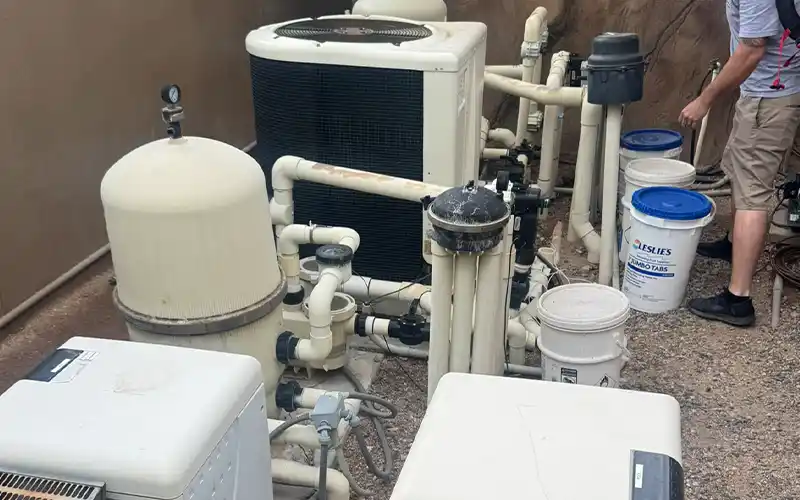
The filter removes fine particles that skimming and brushing cannot collect. Its condition affects water clarity, circulation, and how hard the pump must work.
During a routine visit, the technician may:
- Read the filter pressure gauge
- Compare the reading with the pool’s normal operating pressure
- Look for restricted return flow
- Check for leaks around the filter
- Note damaged clamps, lids, or fittings
- Recommend cleaning when pressure or performance indicates it
A pressure reading is useful only when the technician knows the system’s normal baseline. Different pools and equipment setups can operate at different pressures.
A full filter cleaning is usually not completed during every weekly visit. Cartridge removal, backwashing, grid cleaning, sand maintenance, or media replacement may follow a separate schedule and price.
Professional pool maintenance should make that distinction clear. The routine visit monitors filter performance, while scheduled filter service provides the deeper cleaning the equipment requires.
Accessible Equipment Is Visually Inspected
Routine service is not the same as a complete equipment inspection. However, the technician should observe accessible components for obvious changes or warning signs.
The equipment review may cover:
- Pump operation
- Filter condition
- Visible plumbing
- Valves and connections
- Heater status
- Salt system indicators
- Automation panels
- Timers and schedules
- Water features
- Cleaner equipment
- Accessible electrical or control alerts
The technician may notice:
- Drips or damp areas
- Cracked fittings
- Unusual vibration
- Grinding or rattling sounds
- Cloudy pump-lid seals
- Air entering the circulation system
- Heater error messages
- Salt-system warnings
- Automation connection problems
- Equipment running outside its expected schedule
Finding a warning sign does not authorize an automatic repair. The company should explain the observation, assess its urgency, and provide a separate estimate when diagnostic or repair work is needed.
Service Should Adjust to Greater Phoenix Conditions
Scottsdale and Mesa pools do not experience identical conditions every week. Routine care should account for weather, use, debris, and seasonal changes.
Hot, Sunny Periods
Strong sunlight and higher pool use can affect sanitizer demand. The technician may need to monitor chemistry trends, water level, circulation, and pump schedules more closely.
Dust and Monsoon Activity
Wind and storms can add leaves, dirt, and fine particles quickly. The visit may require more brushing, basket cleaning, vacuuming, and filtration attention.
Cooler Months
Lower water temperatures and reduced swimming can change chemical demand. Pump schedules and heating needs may also differ from summer operation.
Mineral-Heavy Water
Evaporation leaves dissolved minerals behind. Over time, poor balance can contribute to scale around tile, salt cells, heaters, and plumbing.
Season-aware service does not mean changing everything after every weather event. It means recognizing that a fixed chemical dose and identical visit routine may not fit changing pool conditions.
The Visit Ends With Documentation
A service report tells the homeowner what happened when no one was watching. It also creates a history that can reveal gradual changes.
A useful report may include:
- Date and time of service
- Cleaning tasks completed
- Water chemistry readings
- Chemicals added
- Filter pressure
- Equipment observations
- Photos when relevant
- Follow-up recommendations
- Repairs requiring approval
Documentation should be understandable. Homeowners should not need technical training to know whether the water was tested, the baskets were emptied, or a problem was found.
Reports also help during disputes. If the pool becomes cloudy or equipment stops working, recent notes can show whether conditions had been changing over several visits.
What Is Usually Not Included in a Routine Visit?
“Full service” does not mean every possible pool task is included in the monthly price. Larger or less frequent jobs may require additional time, materials, equipment, or authorization.
Services commonly billed separately include:
- Internal filter cleaning
- Green pool recovery
- Severe storm cleanup
- Leak detection
- Equipment diagnosis
- Pump, heater, filter, or automation repair
- Replacement parts
- Salt-cell cleaning or replacement
- Scale or stain treatment
- Pool draining and washing
- Major chemical correction
- Plumbing or electrical work
Ask the company for a written list of exclusions. This makes it easier to compare monthly plans and prevents surprise charges.
How Long Should a Routine Pool Visit Take?
There is no reliable universal number. Visit length depends on pool size, debris, weather, equipment layout, water condition, and the work required that day.
A small, stable pool may need less time than a large pool after a dust storm. Time alone does not prove that the work was complete or incomplete.
A better standard is the result and documentation:
- Were the scheduled tasks completed?
- Was the water tested?
- Were baskets emptied?
- Were the surfaces addressed?
- Was circulation observed?
- Were important problems reported?
- Did you receive a service update?
A technician should not rush past required work simply to keep every visit the same length.
Questions to Ask a Full-Service Pool Company
Before choosing a recurring plan, ask:
- What is completed during every visit?
- Which cleaning tasks are performed only when needed?
- Which chemistry readings are taken?
- Are routine chemicals included?
- Is filter pressure checked?
- How often should the Spool filter be cleaned based on its type, pressure, and debris load?
- Are equipment observations included?
- Will I receive a service report?
- How are repair concerns communicated?
- Which services cost extra?
- Will the same technician usually visit?
- How does the routine change during summer or monsoon season?
The company should answer with a defined checklist rather than a broad promise to “handle everything.”
See What Complete Pool Care Looks Like
A proper routine visit connects cleaning, chemistry, circulation, filtration, equipment awareness, and communication. Skipping any one of those areas can allow a small problem to continue unnoticed.
Pool Pilots is a full-service pool company serving Scottsdale, Mesa, and surrounding Greater Phoenix communities. See what full-service care includes and request a quote based on your pool, equipment, and current condition.