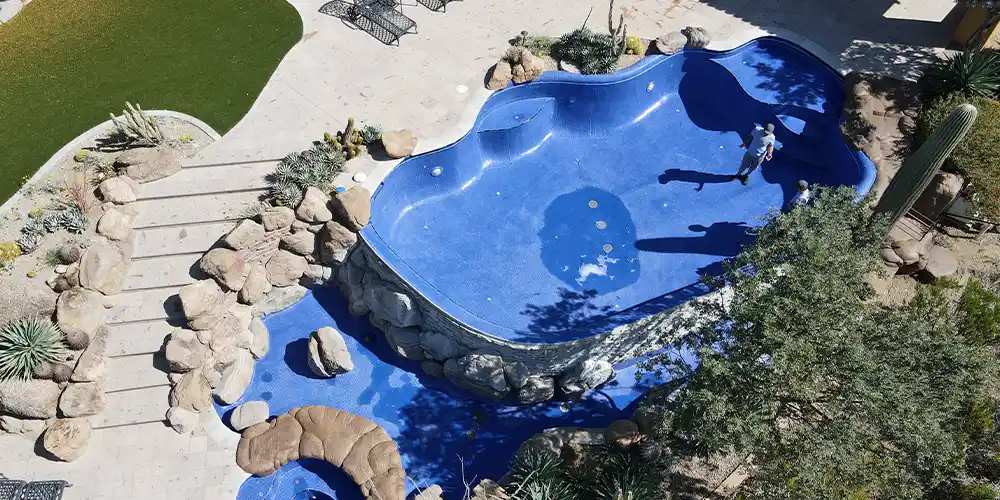

A weekly pool cleaning checklist helps Arizona homeowners stay ahead of heat, dust, debris, and water chemistry changes. In a climate where pools work hard most of the year, small weekly steps can make the water easier to manage.
The goal is not to make pool care feel complicated. It is to create a steady routine so the pool stays cleaner, clearer, and easier to enjoy between service visits.
Why Weekly Pool Cleaning Matters in Arizona
Arizona pools deal with strong sun, dry air, wind, dust, hard water, and long swim seasons. Those conditions can affect the pool even when it is not being used every day.
A weekly routine helps catch small changes before they become cloudy water, algae growth, clogged baskets, or equipment strain. It also gives homeowners a clearer picture of what the pool needs from week to week.
Heat Changes Water Chemistry Faster
Warm weather can make sanitizer levels drop more quickly. When chlorine gets too low, the water may look dull or become easier for algae to affect.
Weekly testing helps keep the water more predictable. It also reduces the need to guess when the pool starts looking off.
Dust and Debris Build Up Quickly
Arizona dust can settle on the pool floor, steps, benches, and tile line. Wind, landscaping, and nearby construction can make this happen even faster.
If dust sits too long, it can affect water clarity and make the filter work harder. Weekly cleaning helps remove debris before it becomes a bigger issue.
Regular Checks Protect the Pool System
Pool cleaning is not only about the water surface. Baskets, filters, pumps, and circulation all support clear water.
When these areas are checked each week, it is easier to notice weak flow, high filter pressure, unusual sounds, or debris buildup.
Weekly Pool Cleaning Checklist
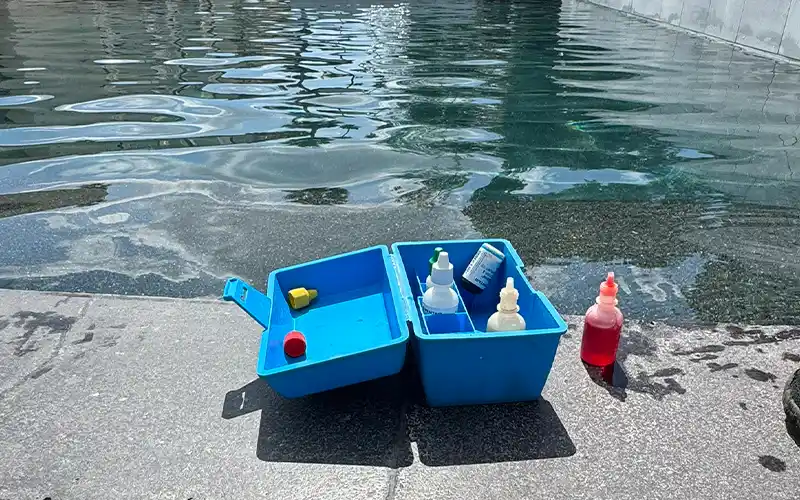
A good checklist should cover the visible cleaning, the water condition, and basic equipment performance. Each part supports the next one.
For Arizona homes, the most useful checklist is simple enough to follow but complete enough to catch common issues early.
1. Skim the Pool Surface
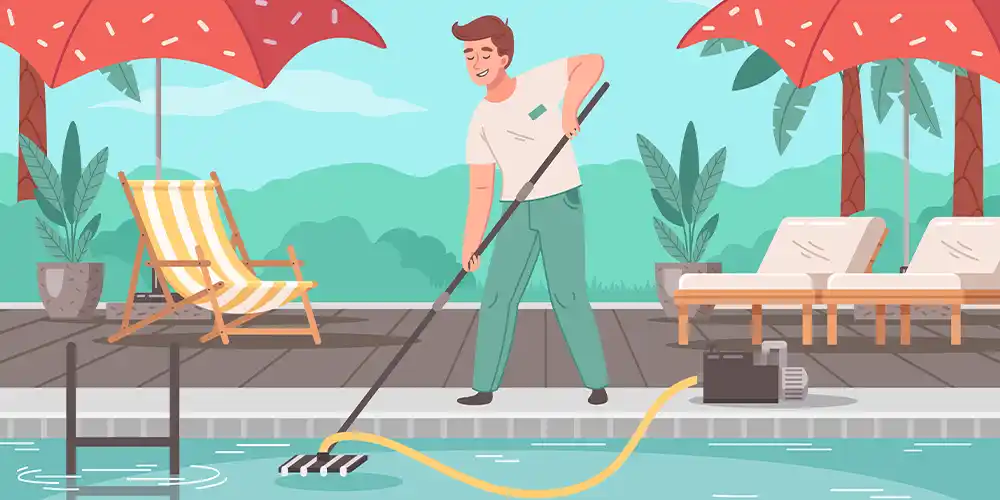
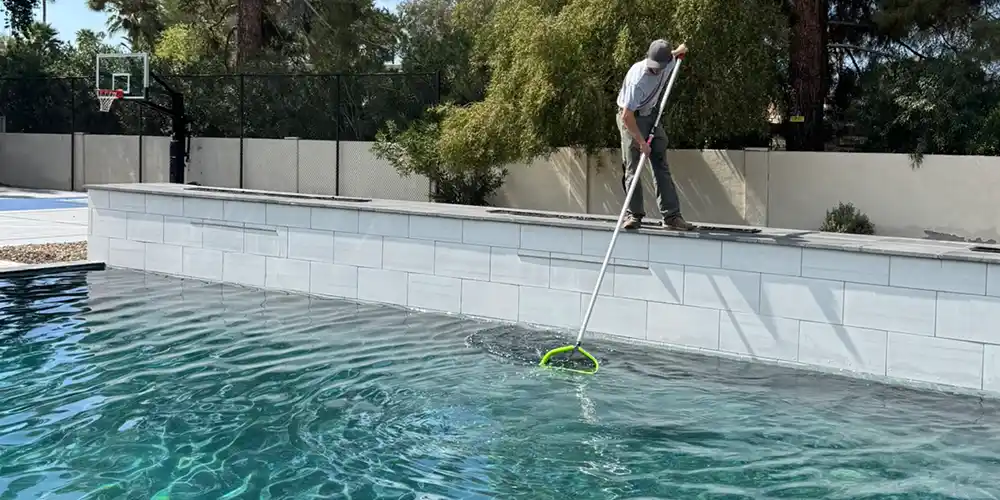
Start by removing leaves, insects, seed pods, and floating debris. This keeps debris from sinking and breaking down in the water.
Skimming also helps the pool look cleaner right away. It is one of the simplest weekly steps, but it makes a real difference.
2. Brush Walls, Steps, Benches, and Tile Lines
Brushing loosens dirt, algae film, sunscreen residue, and mineral buildup. Pay close attention to shaded corners, steps, benches, and areas with low water movement.
These spots often show problems before the rest of the pool. Weekly brushing helps sanitizer reach the surface more evenly.
3. Vacuum Settled Debris
Dust, sand, leaves, and dirt can settle on the pool floor. Vacuuming helps remove what skimming and brushing do not catch.
In windy areas, vacuuming may be needed more often. This is especially true after dust storms, heavy landscaping, or frequent swimming.
4. Empty Skimmer and Pump Baskets
Skimmer and pump baskets catch debris before it reaches the equipment. If they are full, water flow can drop.
Low flow can affect filtration, circulation, and water clarity. Emptying baskets weekly helps the system move water properly.
5. Test and Balance the Water
Water testing should include chlorine, pH, alkalinity, and other key levels based on your pool’s needs. Testing first helps avoid adding chemicals blindly.
Balanced water is easier on swimmers, pool surfaces, and equipment. It also helps keep the water clearer through Arizona heat.
6. Check Water Level
Arizona evaporation can lower the water level quickly. If the water drops too low, the skimmer may pull in air.
That can affect circulation and put stress on the pump. A steady water level helps the system work the way it should.
7. Look at Filter Pressure and Flow
The filter removes fine debris from the water. If pressure is higher than usual or return flow feels weak, the filter may need attention.
This does not always mean something major is wrong. It simply means the pool system should be checked before clarity suffers.
8. Review Basic Equipment Signs
Listen for unusual pump sounds. Look for air bubbles, leaks, weak return jets, or water movement that seems slower than normal.
A weekly cleaning visit is a good time to note these signs. Early awareness can help prevent confusion later.
What the Weekly Pool Cleaning Process Should Look Like
A reliable process should feel clear and consistent. You should know what was cleaned, what was tested, and whether anything needs follow-up.
The best routine is not rushed. It checks the pool as a complete system, not just a surface that needs skimming.
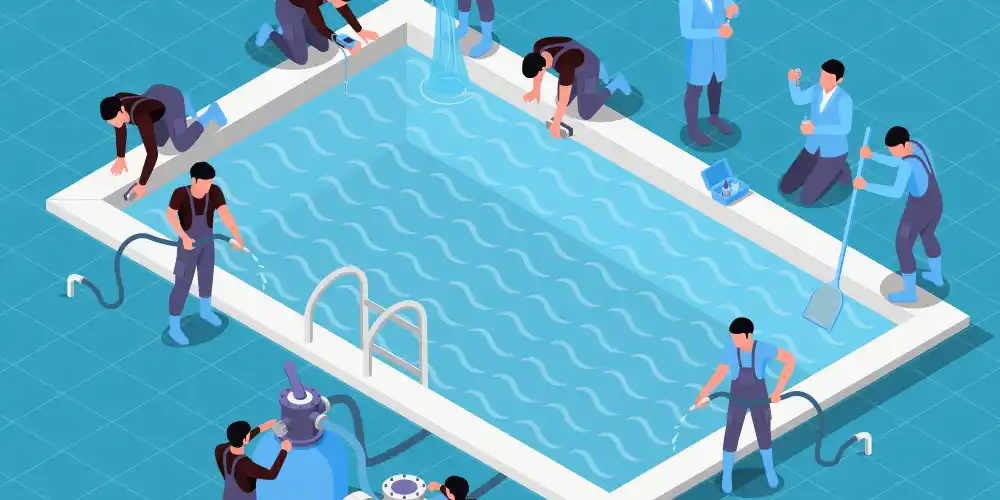
Step 1: Visual Pool Review
The visit should begin with a look at the water, surfaces, debris level, and general pool condition. This helps set the plan for the visit.
A pool with clear water may need routine care. A cloudy, dusty, or green pool may need closer attention.
Step 2: Physical Cleaning
Next comes skimming, brushing, vacuuming when needed, and basket cleaning. These steps remove visible debris and help reduce buildup.
Physical cleaning also supports better filtration and chemical performance. Clean surfaces are easier to maintain.
Step 3: Water Testing and Adjustment
After the pool is reviewed, the water should be tested. Adjustments should be based on actual readings, not guesswork.
This step supports clearer water and helps reduce chemical swings between visits.
Step 4: Equipment and Circulation Check
A basic equipment check should review visible operation, water flow, basket condition, filter pressure, and any obvious concerns.
This is not the same as a full repair diagnosis. It is a practical check that helps homeowners know when something may need service.
Step 5: Clear Service Notes
Clear handoff notes help you understand what happened during the visit. They may mention chemical adjustments, water level concerns, filter pressure, debris load, or equipment observations.
These notes are especially helpful in Arizona because pool conditions can shift quickly from one week to the next.
What May Need Extra Attention Between Weekly Visits
Weekly service is a strong baseline, but some situations call for light care between visits. This does not mean the weekly plan is failing.
It simply means Arizona weather and pool use can change conditions quickly, especially during summer and storm season. For pools in Scottsdale, Mesa, Chandler, Phoenix, Gilbert, Glendale, and Tempe, those changes often show up after windy days, monsoon activity, heavy swimming, or long stretches of direct sun.
After Wind or Dust
After a windy day, skim the surface and check the baskets. If dust has settled, brushing may help before it clouds the water.
Dust can also load the filter faster. If the pool looks hazy, it may need more circulation and testing.
After Heavy Swimming
Sunscreen, sweat, body oils, and frequent use can increase chlorine demand. The water may need an extra check after parties or busy swim days.
If the pool looks dull after heavy use, testing the water is the safest next step.
After Storms
Storms can bring leaves, dirt, rainwater, and organic debris into the pool. Baskets may fill quickly, and chemistry can shift.
A quick cleanup after a storm can make the next weekly visit more effective.
When Professional Weekly Pool Cleaning Helps
Some homeowners prefer to handle pool care themselves. Others want a reliable service routine so they are not constantly checking water, baskets, and equipment.
Professional care can be especially helpful when the pool gets cloudy often, dust returns quickly, chemicals are difficult to balance, or equipment signs are unclear.
Pool Pilots provides weekly pool cleaning for Arizona homeowners who want steady care, clear communication, and service notes they can understand.